Showing posts with label delicioso. Show all posts

Wednesday, December 22, 2010

A Different Green Bean Dish: Judías Verdes Rehogadas con Jamón

Delicioso!I'm nuts about Christmas. I blame it in part on the fact that my dad's a Christmas tree farmer. Whatever the reason, I know this for sure: I'm just giddy with excitement because Christmas Eve is just two days away!!!

If you're looking to change up your holiday side dishes, ditch the green bean casserole with the can of fried onion whatnots on top. Try instead this recipe from Delicioso! The Regional Cooking of Spain :
Judías Verdes Rehogadas con Jamón
(Green Beans Sautéed with Cured Ham)


Whenever we stay in Niserias in Asturias (as we often do, since my husband loves to trout-fish in the cares River) we dine at Casa Julián (see p. 113), where co-owner and cook Vincentina produces simple Asturian fare with an expert hand. My favorite first course is her sautéed green beans, seasoned with garlic and generously sprinkled with mountain ham.

Serves 4

Salt
1/2 small onion
1 1/2 pounds broad green beans, ends snapped off
2 tablespoons olive oil
4 cloves garlic, lightly smashed and peeled
2 ounces Spanish mountain cured ham or prosciutto, in small cubes or thin squares (about 1/4 cup)
Freshly ground pepper

Bring a pot of salted water to a boil, add the onion and green beans, return to a boil, then cook uncovered at a slow boil for about 20 minutes, or until cooked as desired. Discard the onion and drain the green beans in a colander. Refresh with cold water.

In a skillet, heat the oil with the garlic, pressing the garlic with the back of a wooden spoon to release its flavor, until the garlic is golden on both sides. Add the beans and the ham, season with salt and pepper, and sautée, stirring, over a medium flame, until the beans are hot.
If I read this recipe for the first time, I would say "Hell, no!" Then, I'd walk away, shaking my head. "Cook beans for more than 20 minutes? They'll be mush!" I'd laugh, disbelieving. "Boil the onion?!?!?! That onion should be diced and fried with the garlic!"

I'd have a wealth of culinary tradition and experience behind me.

I'd also be wrong.

Judías Verdes Rehogadas con Jamón, or Green Beans with Ham, photo by Wendy A F G Stengel, some rights reserved


This was the first course in our last meal in Spain. We'd made it to Santiago, we'd been to Mass, we'd waited in line for hours to get our credentials, and we had a celebratory meal and final communion for our pilgrimage group.

And this was damned tasty.

I'm not a cook-it-'til-it's-dead girl when it comes to vegetables. I'm really not. But, dang, these beans taste good after a long slow simmer with ham.

Need I say everything was local? Everything? Was local.

People grow their own everything.
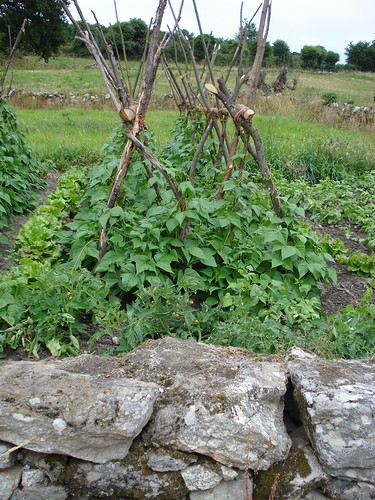
Garden in Spain, photo by Wendy A F G Stengel, some rights reserved


Their own beans.

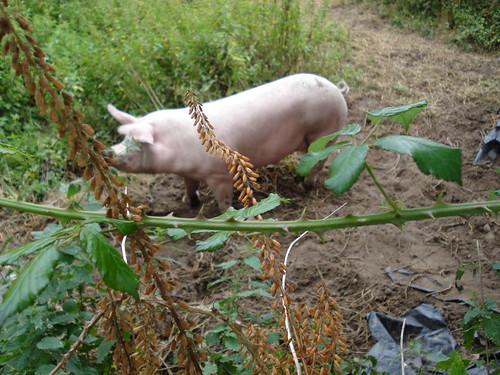
Backyard pig in Spain, photo by Wendy A F G Stengel, some rights reserved


Their own ham.

I know the pig's out of focus (and that it's not ham ... yet); I heard it grunting on the other side of a garden wall, held my camera up high, and sort of just hoped I'd get a picture of whatever was making the sound. So, out of focus or no, I love this picture of the ham-to-be.

But I digress!

I rather thought I might.

Point being: think outside the can of cream of whatever and tinned questionable crispy onionesque casserole topping, and bring a bit northern Spain to Christmas this year.

Sunday, December 19, 2010

A Forest of Greens In Every Yard: Caldo Gallego

Delicioso!Nearly every bar, restaurant, hotel, inn, and whatnot along the pilgrim trail to Santiago serves up a Menu Peregrino, a Pilgrim Meal. It's cheap as chips, three courses, and includes bread and wine. Lots of wine. Usually bottles of wine. Oh, the wine! Anyway. At nearly every place we stopped, I was offered and I greedily accepted a hot bowl of Caldo Gallego. Brothy, with greens and potatoes, and often nothing else that was identifiable, it still stood up to a tired pilgrim's appetite, especially when said pilgrim dunked in some bread. Delicioso! The Regional Cooking of Spain offers up this version:
Caldo Gallego
(Galician Meat, Potato, Greens, and Bean Soup)


Start preparation 1 day in advance
There is remarkably little variation from one cook to the next in the preparation of Caldo Gallego, the famous soup that has traveled the world with Galician émigrés. Only one ingredient, chorizo, is a point of contention. Purists reject it, yet many traditional recipes include it; it does, in fact, produce a richer, more flavorful soup. The kinds of greens may also vary, although grelos—closely akin to collard greens—are most typical. Caldo Gallego is hearty enough to be a meal, but you may choose to serve it in smaller portions as a first course or as an accompaniment to a light supper.

Serves 4-6

½ pound medium dried white beans
1 tablespoon olive oil
2 cloves garlic, minced
1 teaspoon imported sweet paprika
7 cups water
1 pound boneless beef chuck
1 beef or ham bone
¼ pound Spanish mountain cured ham, prosciutto, or capicollo, in a thick chunk
A 2-ounce piece slab bacon or salt pork
1 leek, well washed
½ pound collard greens, Swiss chard, or kale, thick stems trimmed and coarsely chopped (about 4 cups)
¾ pound small (about 2-inch diameter) new or waxy red potatoes, peeled
¼ pound sweet chorizo
Salt

Soak the beans overnight in water to cover. Drain.

In a small skillet, heat the oil and garlic and sauté a minute (the garlic should not color). Turn off the flame and add the paprika. Stir in a tablespoon or two of water.

Add to a soup pot the water, beans, beef, bone, ham, slab bacon, leek, and garlic mixture from the skillet. Bring to a boil, cover, and simmer about 2 hours, or until the beans are almost tender.
Add the greens, potatoes, chorizo, and salt to taste, cover and continue cooking until the potatoes are done, about 30 minutes.

Remove and cut up the beef, ham, bacon, leek, and chorizo and return to the pot. Discard the bone. Cover and let sit 10 minutes before serving. Reheat if necessary.

I don't remember ever seeing potatoes in my caldo, nor often any beans. It's peasant food, and as such lends itself easily to whatever you have on hand. If you have chorizo one day, add it. If not, don't do a run to Whole Foods, just go without.

I wouldn't get too precious about the kind of greens you use, either. Grelos, mentioned above, are turnip greens. You could use 'em, sure. You could use collard greens, or kale, or chard... Use what you have, or the first thing you lay hands on.

Gallego greens garden, photo by Wendy A F G Stengel, some rights reserved


Just about every home we passed on the Camino had a yard filled with greens. Big, waist- or chest-high primeval stalks. When it was time to make the caldo, they'd step outside, cut a few leaves off with their kitchen knives, and they were ready to go.

I'd file this away under "deceptively simple." It doesn't sound like much in the writing up, it doesn't look like much in the bowl, but mercy me, it's a damned fine bowl of soup.

Saturday, December 18, 2010

Pork Pie (Not the Hat): Empanada Gallega de Raxó

Delicioso!When I was a wee thing growing up in Oregon, we didn't have Taco Bell, we had Taco Time. So, I grew up thinking that an empanada was a filled, fried cylinder of questionably fruit origin, covered in sugar. Good stuff. Further experience introduced me to Latin American empanadas, big full pocket pies of meaty goodness. Let's face it: I'm a fiend for a savory pie, I'm a fiend for an individual-sized pie, so I'm a fiend for empanadas.

It comes then as no surprise that when I saw an empanada on a menu in Spain, I ordered it. This recipe from Delicioso! The Regional Cooking of Spain is spot on for the unexpected--but wonderful--empanada:
Empanada Gallega de Raxó
(Galician Pork and Peppers Pie)


Start preparation 2 hours in advance

I have never found a filling that is tastier and more succulent than this one for Galicia’s classic savory pie. Empanadas, however, may be filled with many other mixtures, from tuna, scallops, and sardines to rabbit and chicken. The dough also varies according to the cook, from a real bread dough to a much more refined modified puff pastry. Here I have provided my favorite puff pastry empanada dough from Tapas: The Little Dishes of Spain, but when I do not have the time or inclination to make my own pastry, I go to my local pizzeria and buy an uncooked pizza dough. The empanada comes out just like those of Galicia based on bread dough.
Empanadas cut in small wedges or squares make excellent tapas, and in larger portions, accompanied by a salad, make a most enjoyable light meal. I think they are at their best freshly baked but at room temperature.

Makes about 4 dinner or 8-10 tapas portions

Puff Pastry for Empanadas (p. 109) or 1 ½ pounds pizza dough
3 cloves garlic, peeled
2 tablespoons minced parsely
1 ½ teaspoons minced oregano leaves or ¼ teaspoon dried
Several strands of saffron
1 ½ teaspoons thyme leaves or ¼ teaspoon dried
¼ cup olive oil
3 tablespoons dry white wine
¾ pound boneless pork loin, cut in 1/8-inch slices, then in 1/2-inch strips
1 large onion, preferably Vidalia or Spanish, slivered
¾ pound green frying peppers, cored, seeded, and cut in long narrow strips
3 teaspoons imported sweet paprika
¼ pound tomato, skinned, seeded, and chopped
4 tablespoons (1/4 cup)finely diced Spanish mountain cured ham, prosciutto, or capicollo
Salt
Freshly ground pepper
1 hard-boiled egg, sliced
1 pimiento, imported or homemade (p. 178), cut in strips
1 egg, lightly beaten with 1 teaspoon water

If using homemade dough, prepare according to instructions.

In a mortar or mini processor, mash to a paste the garlic, parsley, oregano, saffron, and thyme. Mix in 1 tablespoon of the oil and the wine. Transfer to a bowl and mix in the strips of pork, coating them well. Marinate 2 hours. Drain the meat and reserve the marinade.

In a shallow casserole, heat 2 tablespoons of the oil and slowly sauté the meat until it just loses its color. Return the meat to the reserved marinade. Add the remaining tablespoon of oil to the casserole and sauté the onion and pepers a minute or two. Cover and cook very slowly for 15 minutes. Stir in the paprika, then turn up the heat, add the tomato, and cook 5 minutes. Stir in the paprika, then turn up the heat, add the tomato, and cook 5 minutes. Add the pork wit hits marinade and the ham and season with salt and pepper.

Roll the dough into a 14- by 28-inch rectangle. Divide into two 14-inch squares, then trim the corners to make two 14-inch circles. Place one of them on a cookie sheet (dampened if using pastry dough, sprinkled with cornemeal or flour if using pizza dough) and arrange the pork mixture to within 1 inch of the edge. Scatter on the egg slices, top with the pimiento strips, and cover with the second dough circle. Roll up the edges and press well to seal. Make several slits in the dough, brush with the beaten egg, and bake at 350°F for about 30 to 35 minutes, or until browned. Cool a few minutes before serving or serve at room temperature.
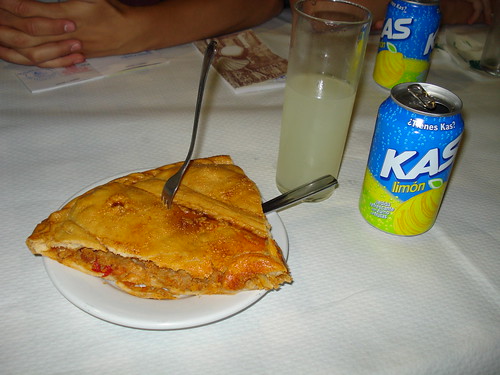
Oh, yes. Bread and meat and deliciousness, coming out looking like a stuffed pizza. Don't believe me? Take a gander:

Empanada and lemon soda. Photo by Wendy A F G Stengel; some rights reserved.


Not the most artistic of all possible photos, but look! That's my wedge o' empanada, proper Spanish empanada! Beats the heck out of a Taco Time anything, I don't mind telling you. (All due and right respect to Taco Time; you taught me to dip crispy burritos in ketchup...you taught me there could be crispy burritos.) Everyone else ordered pizza, so I'm betting that they used pizza dough for the empanada, too. If anyone feels a strong need for the puff pastry recipe referenced above, I'll post it, but, really: use some pizza dough. Speed up your process. Get to the good stuff. The pork. The pie. The pork pie (not a hat).

Tasty, hearty, filling without weighing you down. Trust me. And, yes, you really do serve up a full quarter as a serving. The Camino is a long, long walk.

Delicioso! The Regional Cooking of Spain: Alubias Rojas de Tolosa con Berza

Delicioso!I've been plotting out my course for the new year. See, like a lot of people, I make food-related resolutions, and money-related resolutions. This year, however, I'm making a food-AND-money-related resolution: I'm going to cut back on my food expenditures by planning ahead and actually bringing a home made breakfast and lunch to work with me, rather than going out. Even just walking to the grocer's near work to buy a frozen whatnot adds up, if not in pennies, then in healthfulness. I like to cook, I cook well, what I cook tastes better than what I'd pick up at the grocer's, and so, darn it, I should do it. I was going through old favorite recipes, and kept running smack up against ones that I'd written about here. So here we are, back at the good ol' blog!

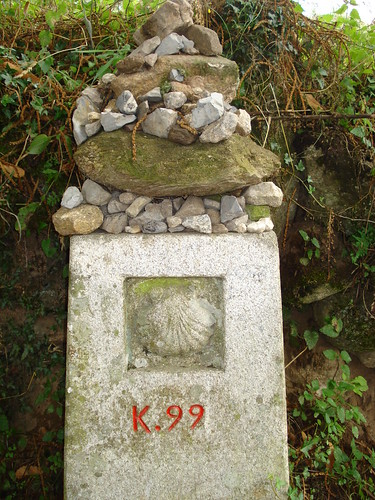
We're starting the new year celebration a touch early with a festive sort of cuisine in Delicioso! The Regional Cooking of Spain by Penelope Casas (Alfred A. Knofpf, New York; 1996). I was lucky enough to get to go to Spain a few years back and walk the pilgrim trail to Santiago; it was an amazing experience, and odds are I'll pepper these posts this week with pictures and stories from the Camino. Like... this one from kilometer 99...a little over 60 miles from Santiago.Pilgrims carry stones with them from their homes and place them along the route; I had one from my mother's yard in Oregon, and one from my yard in DC.

Camino de Santiago, kilometer 99. Photo by Wendy A F G Stengel, some rights reserved.


I ate amazing food in Spain, none of it fancy. Really, not fancy at all. Soups. Stews. Lentils. Cheese. Really filling and tasty. Today's recipe reminds me of that food.

Alubias Rojas de Tolosa con Berza
(Red Beans with Cabbage)


Start prepartion 1 day in advance.

A dollop of cabbage, placed in each bowl of beans, is a delicious complement to this bean stew based on the outstanding red beans that grow in Tolosa in the Basque province of Guipúzcoa along the banks of the Oria River. you can use any kind of red bean to make this dish, but the results will be best with Tolosa, Adzuki, or other dark red beans, sometimes available at food specialty shops.

Serves 4

1 pound small, deep-red dried beans
1 medium onion, peeled and cut in half crosswise
1 large carrot, scraped and cut in half crosswise
1 small leek, well washed
A 1/4-pound piece slab bacon, preferably fresh (otherwise cured)
1/4 pound sweet chorizo
2 tablespoons olive oil
1 medium onion, finely chopped
6 cloves garlic, minced
2 teaspoons imported sweet paprika

Sauteéd Cabbage
3 tablespoons olive oil
1/4 cup onion
2 cloves garlic, minced
1 small head cabbage, coarsely chopped
Salt
Freshly ground pepper

Soak the beans overnight in water to cover. Drain, then combine in a large pot with 6 cups fresh water and bring to a boil. Reduce the heat, add the onion, carrot, leek, bacon, and chorizo. cover and simmer 1 hour.

Meanwhile, heat the olive oil in a large skillet, add the chopped onion and garlic, and sauté slowly until the onion has wilted. Stir in the paprika, then add to the beans. Season with salt, cover, and continue cooking about 30 minutes more, or until the beans are just tender. Wipe out the skillet.

While the beans are cooking, prepare the cabbage. Heat the oil in the skillet and sauté the onion and garlic until the onion has wilted. Add the cabbage, salt, and pepper and stir-fry about 10 minutes. Cover and continue cooking until done to taste.

Serve the beans in soup bowls, accompanied by crusty country bread. Heat the cabbage, transfer to a serving bowl, and pass separately. Typically, a spoonful or two of cabbage is placed in the soup bowl, off to one side--not mixed into the beans.
Yes, please. This would be such a welcoming dish to find at a pilgrim's table after walking 30 kilometers (or even after 3). Hearty. Simple. Serve it with the bread (oh, the bread in Spain!) and a glass or two of wine. My thoughts on wine: stick with Spain, and stick with northern Spain. An Albariño would go great with this, and I know--Albariño is from the northwest of Spain, and Tolosa is in the northeast, but it'd still taste great. I'd go a bit off-local on red, too, and pour a Ribera del Duero.

I feel like going off for a bit on the wines I tasted along the Camino, but I suspect I'll be wandering through that topic a few times this week.